
About The Mulka Project
“We want to bring knowledge of the past to the present, to preserve it for future generations and to understand what meaning it has in the present day and age.”
Dr Marika, Inaugural Cultural Director of The Mulka Project
The name ‘Mulka’ means a sacred but public ceremony, and, to hold or protect.
The mission is to sustain and protect Yolŋu cultural knowledge in Northeast Arnhem Land under the leadership of community elders. The Mulka production house, recording studio, digital learning centre and cultural archive are managed by Yolŋu law and governance.
The Mulka Project strives to employ and train as many Yolŋu of all ages as possible. Currently we have male and female staff spanning three generations. Our facilities are a unique media training ground for future indigenous leaders. We produce and repatriate audio-visual cultural resources and disseminate them throughout the Yolŋu community. We provide industry standard workplace training, create income streams for Homeland communities, whilst employing cultural advisors, film makers, translators, camera operators, editors, artists, and scholars.
At the core of The Mulka Project resides a growing, living archive of Yolŋu knowledge, ceremony, and cultural history. The word, dance, song, and law of elders past return to the minds and hearts of our people and repeat on through the generations. In the same way The Mulka Project gives voice to generations past it also has an obligation to let contemporary Yolŋu knowledge and law speak to coming generations. In the hands, and on the shoulders, of Yolŋu, The Mulka Projects cameras and microphones are the Eyes and the Ears of our children’s unborn children.
Mulka Team
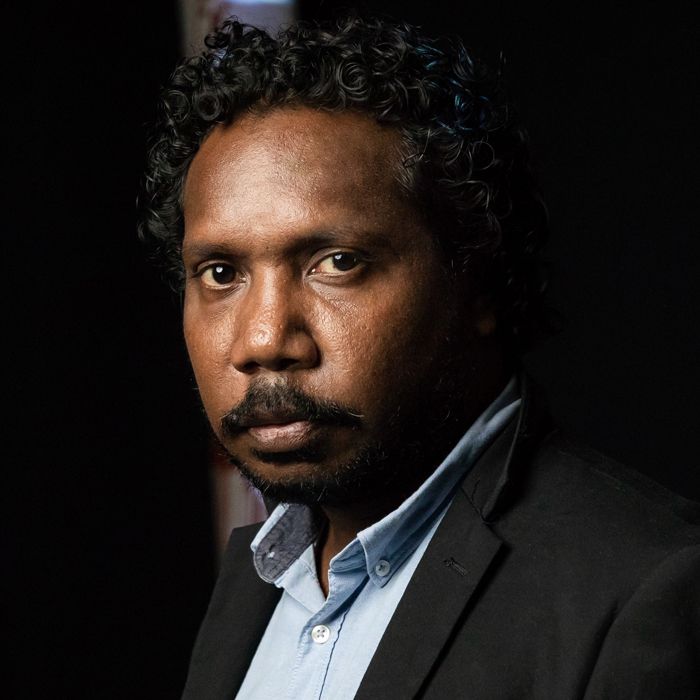
Ishmael Marika is The Mulka Projects, Creative Director and has produced a plethora of works since his commencement in 2010. Some of his earlier work includes a documentary on Yolŋu land rights; a dramatic short horror film entitled Galka and an art piece titled My Grandfather Passing on a Message, which was accessioned by the NGV. In 2015 he was recognised for his many achievements in film-making and was presented the NT Young Achiever of the Year Award. In 2016 Ishmael won a NATSIAA for his film piece Sunlight Energy II and the very next day received a NIMA award for Best Traditional Song. In 2017 Ishmael produced a film piece which is displayed at Wynyard Station on a giant curved LED screen and he also collaborated with artist Mr N. Wunuŋmurra on an installation for Tarnanthi. In 2019 he was heavily involved in the development of the Gurruṯu (Yolŋu Kinship) Engine which was displayed at Tarnanthi and completed a collaborative large scale screen piece with Patrina Munuŋgurr for the UTS.
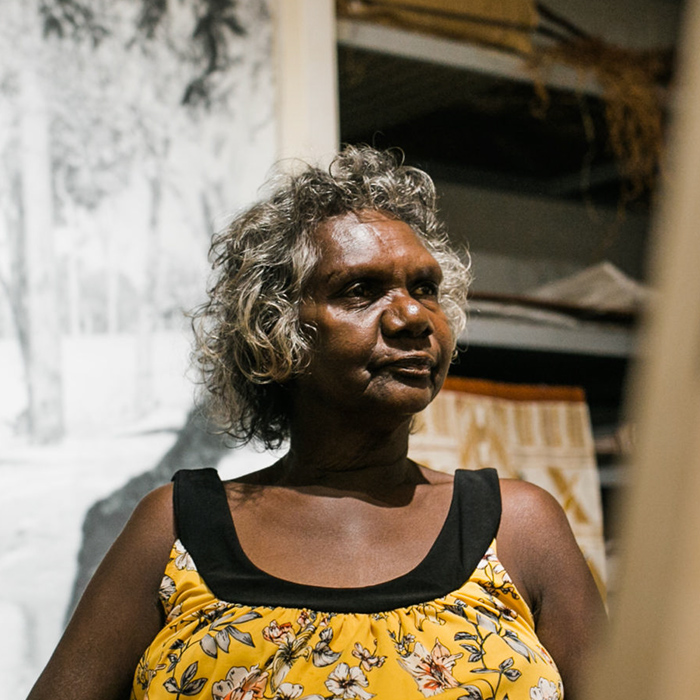
Dela Munuŋgurr has worked as a linguist, translator, and advisor for over 40 years. Before coming to work for The Mulka Project she was working in the field of health and education. Her years of experience working with the community and her skills as a linguist have made her a vital part of our team. Her position as a senior Yirritja moiety woman within the Gumatj clan makes her perfectly qualified to be a strong leader and Cultural Director for The Mulka Project.
Our language team headed by Dela works with various language groups throughout our community to ensure the work that Mulka is producing is linguistically correct. This language team also works closely with western academia around the world.

Joseph Brady has been the Program and Technical Director of The Mulka Project since 2012. Since his arrival here in Yirrkala he has worked with the governing artists to expand The Mulka Studios into a vibrant digital production centre servicing Mulka’s Yolŋu cultural acrhives. Working alongside and mentoring Yolŋu filmmakers, media workers, and digital artists he has helped the community accomplish a myriad of cultural productions in the field of film, music, animation, VR, and digital art. He has worked with his fellow directors to repatriate innumerous collections back into the community from around the globe. Joseph also develops and maintains relations with external organisations to create opportunities and funding streams for the Yolŋu community.
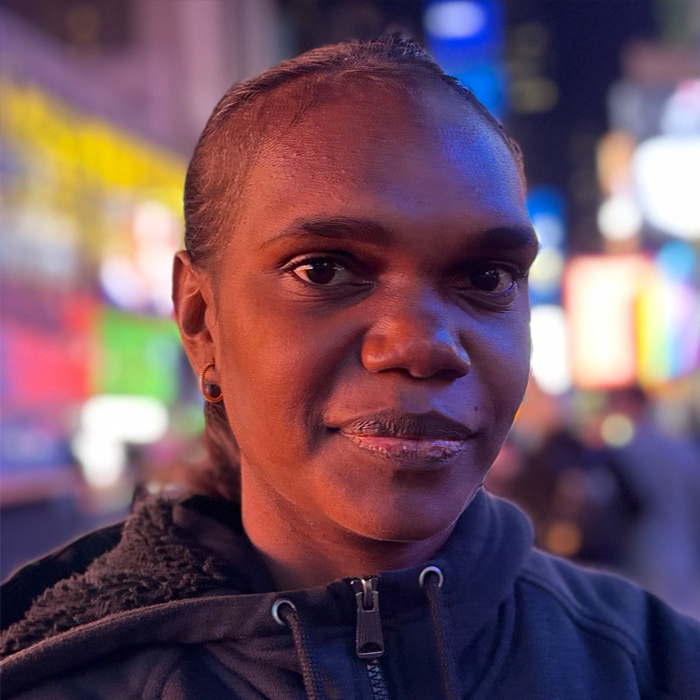
Dhukumul Waṉambi, youngest daughter of the late Wukuṉ Waṉambi, is an emerging Yolŋu artist and digital producer at The Mulka Project. Graduating with distinction from Yirrkala Bilingual School in 2021, she co-authored an essay on Gurruṯu (Yolŋu kinship) for Maḏayin: Eight Decades of Aboriginal Australian Bark Painting. Following her father’s passing in 2022, Dhukumul resumed work at The Mulka Project, contributing to filming, editing, and animation. She played a key role in Rarrirarri , showcased at Melbourne’s Shadow Spirit exhibition, and travelled to the USA in 2024 to honour her father’s legacy at the Maḏayin exhibition. A finalist in the 2024 NATSIAA Awards, her artwork Gurka’wuy reflects her homeland’s saltwater designs.
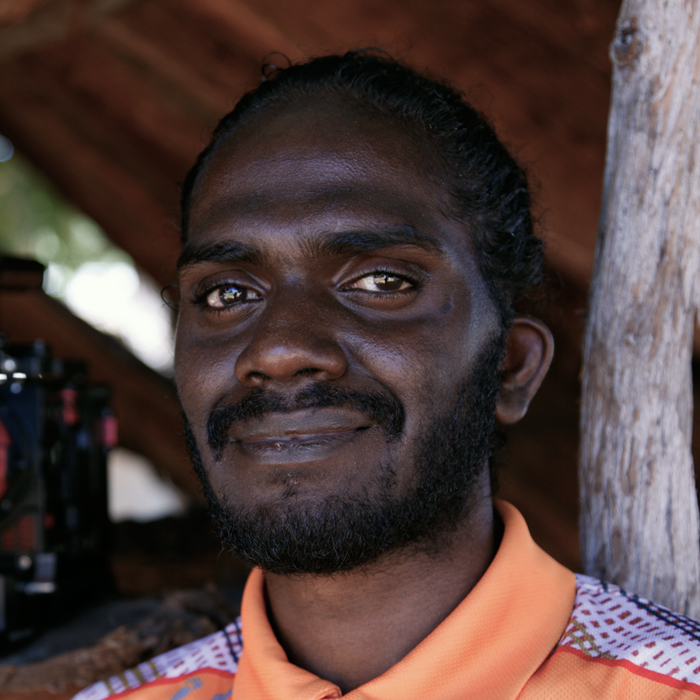
Gutiŋarra Yunupiŋu has been deaf since birth and overcome many barriers . As soon as he graduated Year 12 in 2015 he was eager to commence employment at The Mulka Project as a filmmaker. In 2017 Gutiŋarra produced a film for NITV titled Gutiŋarra Djälkiri, which focused on his first language, Yolŋu sign language. In that same year he also produced a collaborative video piece for Tarnanthi, titled Yuta Mulkurr and in 2018, his film Maykarran was a finalist in the Digital Portraiture Awards. In 2019 Gutiŋarra was awarded the NATSIAA Multimedia Award for his 6k filmwork Gurruṯu mi’ mala (My Connections) this film was later exhibited at Tarnanthi and has received great interest due to the fascinating concept underlying this art piece and his history as a film maker and artist. He is currently a finalist for NATSIAAs 2020, the winners will be announced later this year.
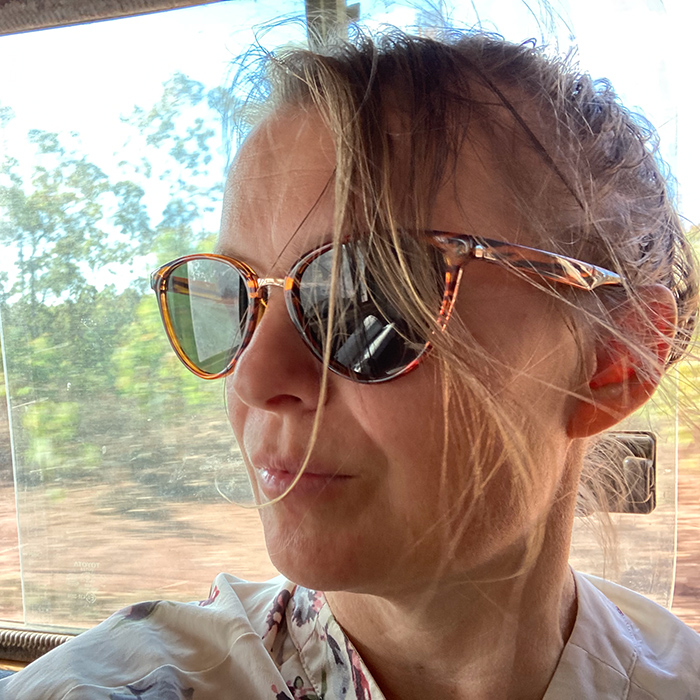
Bec Charlesworth graduated RMIT University, Melbourne, with a Bachelor of Media Arts, majoring in Film, Sound and Animation. She was employed by the film distribution company Madman Entertainment for 5 years as their Sound Engineer and also managed DVD Production for Madman Films and SBS. She has published four albums with Mushroom Music and numerous Video Clips, Short Films and Sound Designs. Since 2012 Bec has been employed as The Mulka Projects Studio Co-ordinator. She manages the studio workflow and handles the onsite skills training and up-skilling required to maintain Mulka staff at an industry level. As well as her Production Studio duties Bec works alongside yolŋu curators to manage the Mulka Museum and is responsible for maintaining the Mulka Museum/Digital Archive Database.
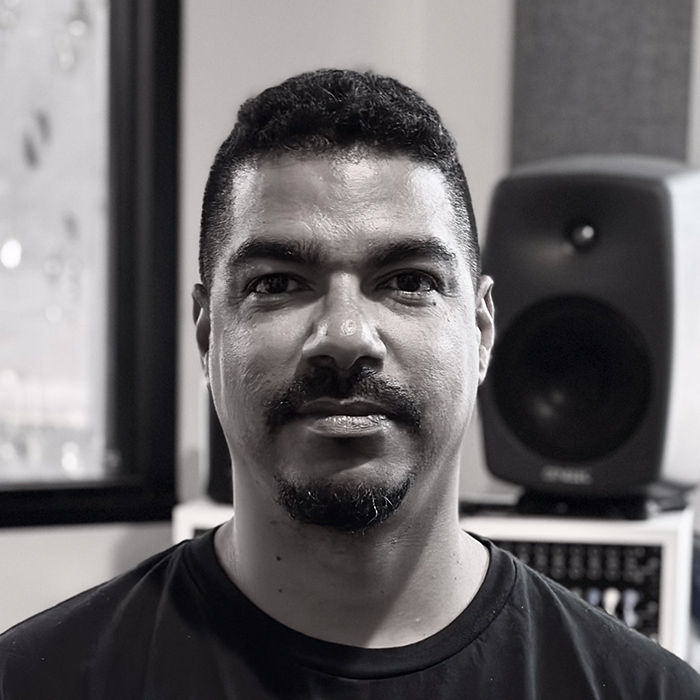
Arian Pearson has been Mulka Music’s head studio engineer since he commenced in 2015. He works with a wide range of local artists across three generations. A crucial part of his job is to record songlines of the elders remotely and in the studio. He has produced sound designs for many of The Mulka Projects exhibitions and films and also works closely with school groups from Yirrkala and Nhulunbuy as well as hosting workshops in the Mulka Studio. Arian has produced local artists and bands such as Marrtjala, Ezy 5, Marcus Lacey, Bala G, Johnathan Yunupiŋu, Aris MC, Yirrmal, The Y Boys, Yirrŋa Yunupiŋu and other up and coming artists. Arian has helped female Yolŋu musician Dhapanbal Yunupiŋu’s musical career flourish. In 2019 she released her debut album Biḏiwiḏi which she produced in the Mulka Recording Studio with Arian mentoring her along the way.
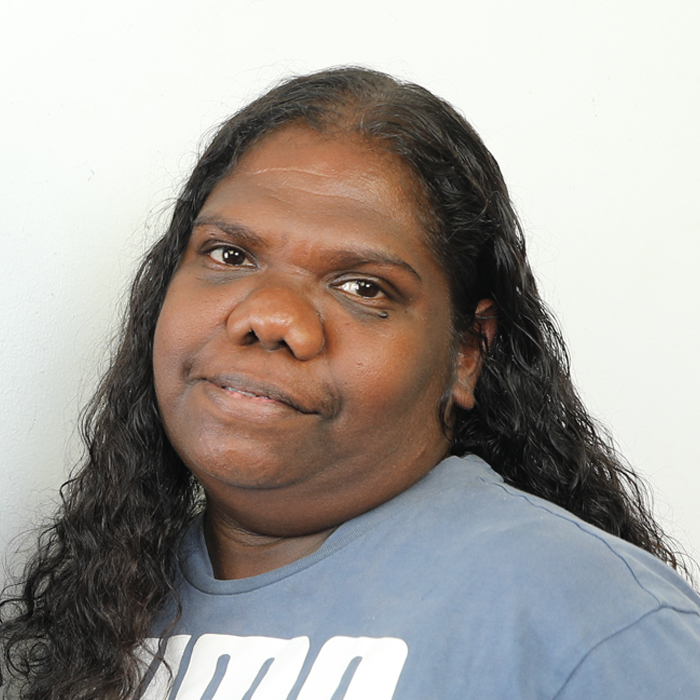
Bulmirri Yunupiŋu brings over 15 years of linguistic expertise to her role at The Mulka Project. Beginning her career at Yirrkala School’s Literature Production Centre, she joined Mulka as a linguist in 2021, specialising in transcription, translation, subtitling, and archive management across Yolŋu languages and English. Notable achievements include translating Little J and Big Cuz into Dhuwaya, coordinating Yolŋu voice actors, and supporting recording sessions. Bulmirri also contributed to the Maḏayin catalogue, transcribing and translating artists’ explanations of Yolŋu bark paintings. Her meticulous cataloguing of over 500 Yirrkala School cassette tapes from the 1970s–2000s preserved ancestral stories, songlines, and historical accounts, ensuring their accessibility for future generations.
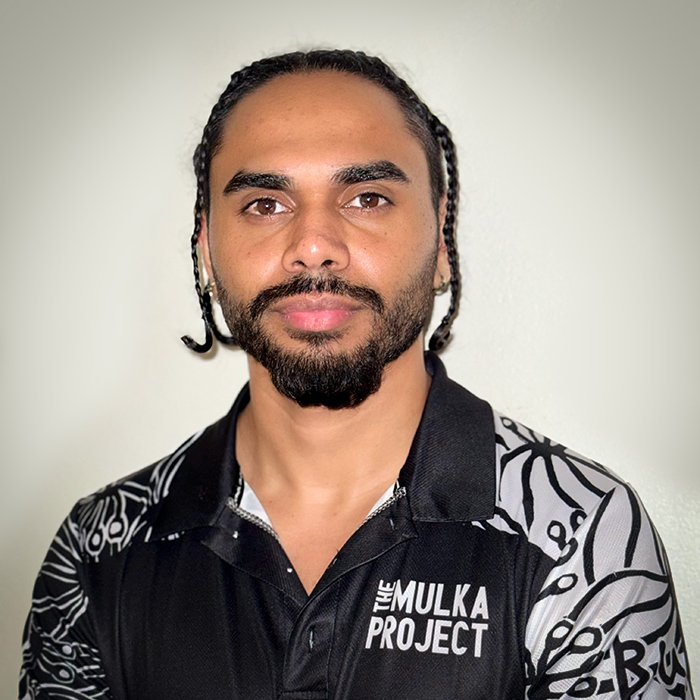
Djunmili Yunupingu, a Gumatj man, recently joined The Mulka Project as a junior filmmaker, bringing expertise in video production, editing, and storytelling to document and celebrate Yolŋu culture. Holding a Diploma in Media Arts, he is skilled in Adobe Creative Cloud, FL Studio, GarageBand, and cinematography. Djunmili’s experience includes a traineeship with ABC-TV, acting roles in social media and television campaigns, and recognition such as the 2017 Adelaide International Youth Film Festival Award for editing and sound work. A cultural dancer at events like WOMADelaide and Garma Festival, Djunmili is also a dedicated mentor, leading youth music and film workshops that foster creative expression and intercultural understanding.
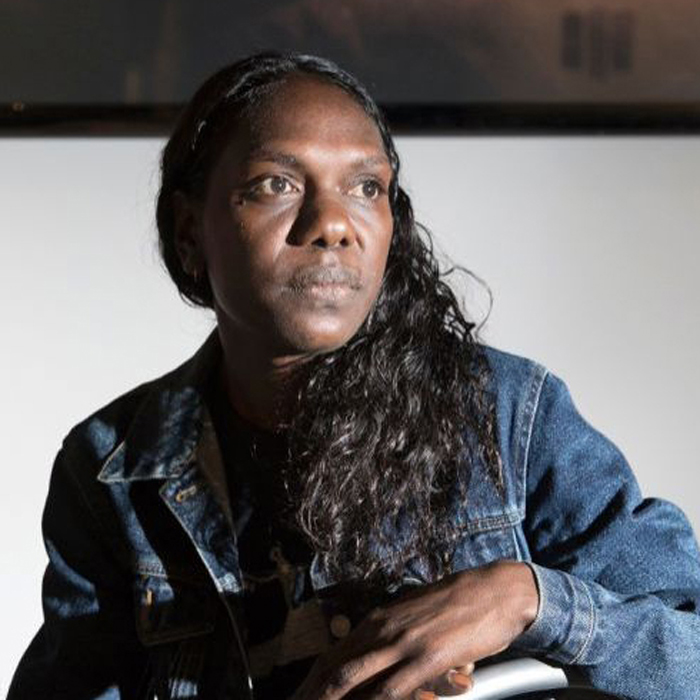
Patrina Munuŋgurr is one of the leading cinematographers and post-production technicians at The Mulka Project. Patrina has produced many popular films including a 7 part series documenting the 7 colours of master weaver and colour dyer Laŋani Marika. In 2017 Patrina delivered her first television commission for NITV, a documentary titled Waṉḏawuy Dhapi she also exhibited her first screen-based artwork Gurrkurr Dhalkuma at The Good Shed Gallery. In 2018 Patrina produced a 6K film work titled, Dhunupa’kum Nhuna Wanda, which was awarded the 2018 NATSIAA Media Award. She currently has a collaborative film piece with Ishmael Marika displayed on a 3×16:9 screen at the University of Technology Sydney based around the season of Rarranhdharr.